
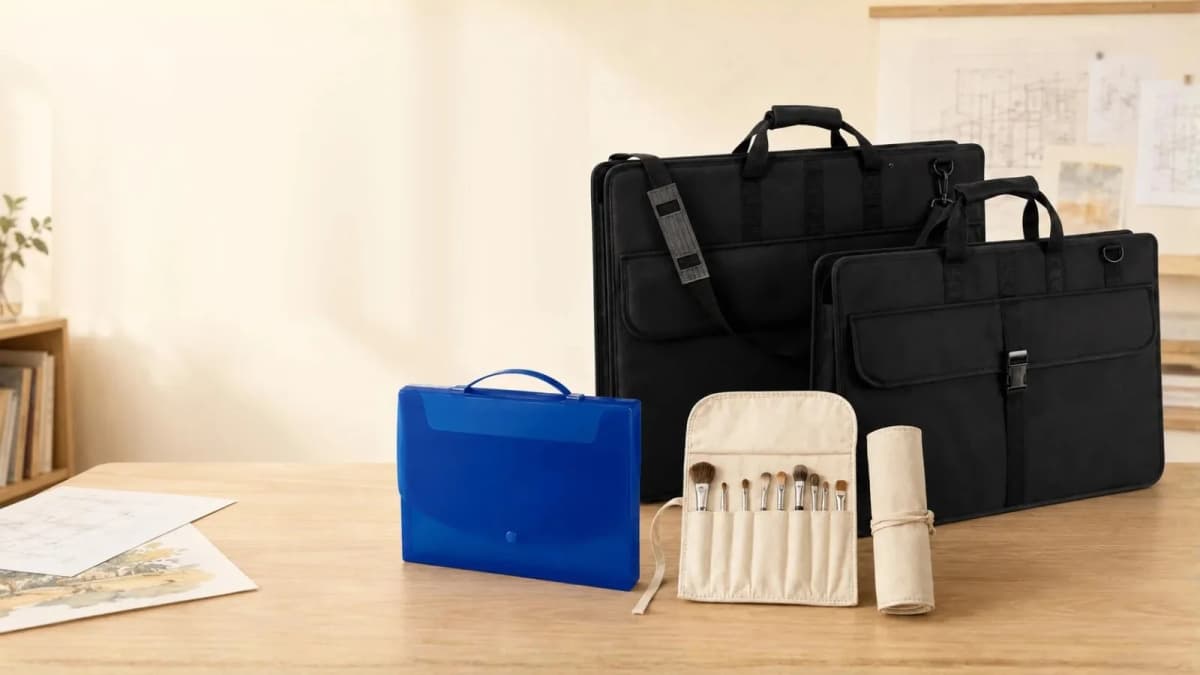
A student walking between classes, a studio storing finished boards and an architect carrying A1 plans all need different things from a bag. Start with the workflow and the right size and features follow.
Below are the four workflows we see most, the products that fit each one, and how retailers can use them to guide customers.
Which product fits which workflow?
Use this as a quick guide, then read the section for your situation.
| Workflow | What matters most | Start with |
|---|---|---|
| Students, daily carrying | Light, quick to open, affordable | Vertical Display Portfolio, Clear Holder, Flexible PP Tube |
| Studio and presentation | Protection, order, a professional look | Ring Binder Portfolio, Oxford Horizontal Display Portfolio |
| Travel and workshops | Compact, fast to pack and unpack | Brush Roll, Lightweight Art Carry Case, Canvas Art Supply Tote |
| Large-format work | Size, rigid support, safe transport | Zipper Drafting Bag, Heavy-Duty Expanding Carrier, Telescopic Tube |
What do students need for daily carrying?
Something light enough that carrying it isn't a chore, and quick to open between classes. Students carry sketchbooks, worksheets, loose sheets and tools all day, so weight and easy access matter more than heavy protection.
- Vertical Display Portfolio: shows work page by page and stands up for a quick critique.
- Clear Holder / Presentation Book and Drafting File: thin, light ways to keep handouts and finished sheets flat.
- Flexible PP Carrying Tube: for rolled drawings and posters.
- Artist Brush Roll and Canvas Painter Apron: for painting classes.
For retailers and school suppliers, this is the entry-level range: easy to explain and suited to bulk orders for art and design courses.
What works for studio storage and presentation?
A structured case that keeps finished work flat, separated and presentable. In a studio, work is stored and shown repeatedly, so protection and organisation matter more than weight.
- Ring Binder Portfolio: sleeves on rings, so pages can be reordered before each review. See our Professional Series guide.
- Oxford Horizontal Display Portfolio: opens into a desk easel for landscape work and client presentations.
- Oxford Flat Art Portfolio: a slim case for storing and carrying finished sheets.
- Plastic Sleeves: refills to protect individual pieces inside a binder.
This suits art studios, design departments and creative offices. Our guide to storing a portfolio between uses covers keeping that work in good condition.
What do you need for travel and workshops?
Compact organisers that keep tools visible and secure, and pack quickly. Workshops and outdoor sessions don't leave time to dig through a bag.
- Artist Brush Roll: one slot per brush, rolls up small.
- Lightweight Art Carry Case: a light hard-sided case for paper and small boards.
- Canvas Art Supply Tote and Structured Studio Tool Tote: for paints, bottles and tools.
- Flexible or Telescopic Carrying Tube: for rolled work on the move.
Choosing between tool bags? See How to Choose an Art Supply Bag.
How do you store and carry oversized artwork?
With a case made for the size, not a standard bag. A1 boards, posters and presentation sheets bend and crease quickly without rigid support.
- Zipper Drafting Bag, Standard Series: six sizes from A4 to A1, including B4 and B3. More in our zipper drafting bag guide.
- Heavy-Duty Expanding Portfolio Carrier: expands for thicker stacks and boards.
- Professional Drawing Carry Case: a hard-sided case for drawings that must stay perfectly flat.
- Telescopic Carrying Tube: adjusts to the length of rolled plans and prints.
This range covers customers that standard A4 and A3 products can't serve, which makes it worth stocking for specialist art stores.
How can retailers sell by workflow?
Ask what the customer does with their work, then point them to a shelf, not a size chart. It's an easier decision for the customer, and it often leads to more than one item.
- Group the display by situation, with a simple sign for each: "Class and daily use", "Studio and presentation", "Travel and workshops", "Large format".
- Put add-ons next to the main item: sleeves next to ring binders, brush rolls next to tool totes, tubes next to drafting bags.
- Start the conversation with one question: "Will you carry it every day, or mostly store it?"
Planning a range for a store or school program? Our portfolio bag category guide shows how to build one from entry level to presentation grade.
Frequently Asked Questions
How do I choose between a student organiser and a studio case?
Go by how often it moves. If it's carried every day between classes, choose something light. If it mostly stays in one place holding finished work, choose a structured case.
What's the difference between a travel organiser and a studio case?
A travel organiser is built to pack and unpack quickly for workshops and off-site work. A studio case is built to protect and present work that stays mostly in one place.
Do I need large-format storage if I already have a standard portfolio bag?
Only if your work regularly goes beyond A3. Standard bags aren't designed to stop A2 and A1 sheets bending; a drafting bag or carrier sized for them is.
Can one customer need more than one category?
Often. A design student may need a light bag for daily classes and a structured case for finished work, so recommending two products is normal.
What should retailers ask when a customer isn't sure what they need?
Ask what they do with the work: carry it daily, store it, travel with it or protect an oversized piece. Then show them that section of the shelf.
Key takeaways
- Choose by workflow first: daily carrying, studio, travel or large format.
- Students need light and quick; studios need protection and order.
- Travel calls for compact organisers; oversized work needs a case made for the size.
- Retailers can group displays by situation and place add-ons beside the main item.
Need these products in your own branding? See OEM & Custom or send us your requirements.