
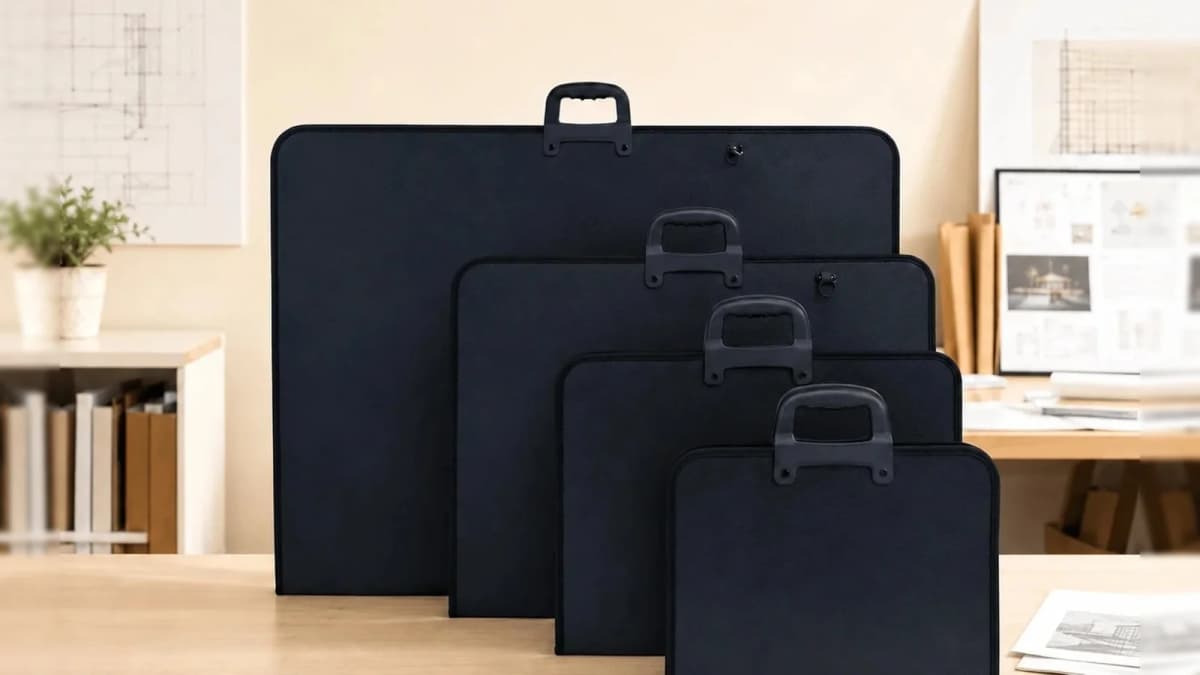
Most artwork is now shared as a PDF, on Behance or on Instagram. So it's fair for a buyer to ask whether physical portfolio bags are still worth shelf space.
Short answer: yes, if the range is built well. This guide covers who still buys them, what they actually pay for, and how to put together a range from entry level to presentation grade.
Is there still demand for physical portfolio bags?
Yes. Digital portfolios handle the first look, but reviews, interviews, critiques and client meetings still put printed work on the table, and that work has to get there flat and clean.
The wider market is growing, not shrinking. Fortune Business Insights valued the global art and craft materials market at about USD 23.6 billion in 2025, with growth forecast at around 6% a year to 2034.
The core customers keep coming. In the US alone, around 90,200 bachelor's degrees in the visual and performing arts were awarded in 2021–22, according to the National Endowment for the Arts. Each year brings a new intake of students who need to carry work to class and to reviews.
Who buys portfolio bags?
The category doesn't depend on a single customer type, which is what keeps it steady:
- Art and design students: drawings, coursework and review portfolios.
- Architecture and design students: large-format sheets and boards.
- Teachers and educators: teaching materials and student work.
- Designers, illustrators and photographers: client meetings and presentations.
- Office users: plans, drawings and other large documents.
They reach the product through three channels: art supply stores, stationery retailers, and school or institutional suppliers who buy for whole departments.
What do buyers actually pay for?
Protection first. Paper bends, creases, picks up dust and moisture, and large sheets are the worst affected. A structured case with firm sides, a reliable zip or closure, inside pockets and straps solves a problem the customer has already had, which makes it an easy product to explain.
Plain looks come second. In a review or client meeting, the case shouldn't compete with the work inside it. That's why black and neutral colours dominate, and why the same case sells to students, teachers and professionals alike.
How should you build a portfolio range?
Think in three levels plus add-ons, so a customer can trade up without leaving the shelf.
| Level | Product | Sizes | Main customer |
|---|---|---|---|
| Entry | Zipper Drafting Bag, Standard Series | A4, B4, A3, B3, A2, A1 | Students, school bulk orders |
| Mid | Zipper Drafting Bag, Upgrade Series | A4–A1 | Design students, everyday carrying |
| Presentation | Ring Binder Portfolio, Professional Series | A4–A1 | Reviews, interviews, client meetings |
Then add the items people buy alongside a portfolio:
- Telescopic carrying tubes for rolled drawings and plans.
- Refill sleeves for ring binder portfolios.
- Brush rolls for students carrying painting kits.
A practical way to start: A3 and A4 in the entry and mid levels, then add A2, A1 and the presentation level once you see which customers come in. For more detail on each series, see our guides to the Upgrade Series and the Professional Series.
Neutral colours or bright ones?
Both, for different lines. Keep the professional line neutral and use colour where the customer is younger or the channel is gift-led.
- Professional line: black, grey or navy, for art schools, design users and presentations.
- School and retail line: brighter colours for younger students, school supplies and gift channels.
Black is the standard across our range. Other colours can be developed as an OEM order; see OEM & Custom.
Frequently Asked Questions
Are portfolio bags still relevant now that most portfolios are digital?
Yes. Digital handles the first look, but reviews, interviews and critiques still happen in person with printed work, and that work needs to travel safely.
What should retailers lead with when selling portfolio bags?
Protection. Most customers buy after work has been bent, creased or lost, so show how the case keeps sheets flat and organised.
Why are most portfolio bags black?
So the case doesn't compete with the artwork inside it, and so one colour sells across age groups and user types.
Which sizes should a store start with?
A3 and A4 sell to the widest group. Add A2 and A1 for art and design students, and B4 or B3 if your local market uses B sizes.
Can portfolio bags be made as private label?
Yes. Size, material, colour, inside layout and branding can be customised. OEM MOQ is 500 pcs per style and size.
Key takeaways
- Demand is steady: the art materials market is growing, and art and design students arrive every year.
- Customers buy protection first and plain looks second.
- Build the range in levels: entry, mid and presentation, plus tubes, sleeves and brush rolls.
- Start with A3 and A4, then widen the size range as you learn your customers.
Planning a range? Our wholesale buyer's guide covers MOQ, sampling and lead times, or send us your requirements.