
Before tablets, laptops, cloud storage and digital documents became part of everyday work, paper was the center of business, education and communication.
In that period, offices relied on printed reports, contracts, quotation sheets, catalogues and internal documents. Schools used handouts, worksheets, student records and teaching materials. Salespeople carried brochures, price lists and product information when visiting customers. Almost every industry needed a simple and reliable way to organize paper.
That was the time when file folders and clip files became important daily products.
They were not luxury items. They were practical tools. And because they solved such a common problem, they sold very well in offices, schools, stationery stores and institutional channels.
The Early Role of File Folders
File folders were one of the most basic but useful filing products.
Their purpose was simple: to classify documents and keep them in order. A file folder could hold papers by subject, customer, department, class, project or date. For users who handled many documents every day, this small product helped reduce confusion and made information easier to find.
At that time, document organization was not digital. People could not search a file name on a computer or open a cloud folder. If papers were not properly sorted, they were easily lost, mixed up or damaged.
This made file folders a necessary product for offices, schools and administration work.
From a sales point of view, file folders were strong because the demand was broad. They were used by companies, teachers, students, banks, government offices, training centers and stationery retailers. The product looked simple, but the market was large.
Why Clip Files Became Popular
As users needed more convenient ways to hold and review documents, clip files became another important product.
A clip file added one key function: it could firmly hold papers in place without punching holes or using extra binding. This made it useful for temporary documents, meeting notes, application forms, reports, classroom materials and sales presentations.
For office workers, clip files made documents easier to carry into meetings.
For teachers, they were useful for handouts and class records.
For salespeople, they worked well for presenting product sheets or quotations.
For students, they helped keep loose papers together.
This is why clip files became popular. They were simple, affordable and easy to use.
In a time when paper moved from desk to desk, classroom to classroom, and customer to customer, a clip file was a very practical solution.
Products That Sold Well Because They Matched the Era
Looking back from today, these products may seem ordinary. But in that era, they matched the way people worked.
There were no iPads for reading documents.
Computers were not yet part of every desk.
Cloud storage did not exist.
Digital catalogues were not common.
Most communication still depended on printed paper.
Because of this, filing products were not optional. They were part of daily workflow.
This is an important point from a Top Sales perspective: a good product sells well when it matches real user behavior.
File folders and clip files did exactly that.
They answered the daily need to organize, carry, protect and present documents. They were also easy for retailers to display, easy for customers to understand and suitable for repeated purchase.
From Basic Filing to Product Evolution
File folders and clip files also became the foundation for later product development.
From file folders, the market moved toward more structured document storage.
From clip files, users saw the value of holding papers securely and presenting them neatly.
From basic office use, the products gradually expanded into schools, tutoring centers, institutions, events and presentation purposes.
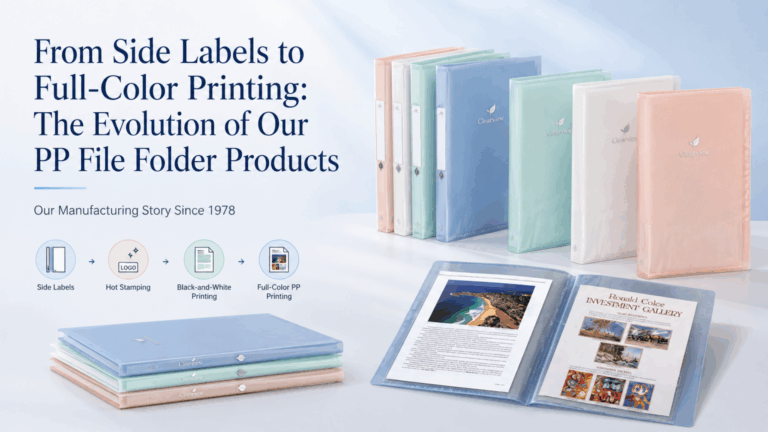
Over time, these products also changed in appearance and function. Side labels helped users classify documents. Hot stamping added a more formal look. Black-and-white printing allowed schools and companies to add names or simple information. Later, full-color PP printing made folders more attractive and suitable for branding, education and promotional use.
This evolution shows that even a simple filing product can grow with the market.
The basic need remained the same, but the product became more flexible, more visual and more customizable.
Why This History Matters to Our Factory
For our factory, file folders and clip files were not just early products. They were part of our manufacturing foundation.
Through these products, we learned how customers use documents in real life. We learned how material thickness affects durability. We learned how cutting, folding, clipping, printing and finishing influence the final user experience.
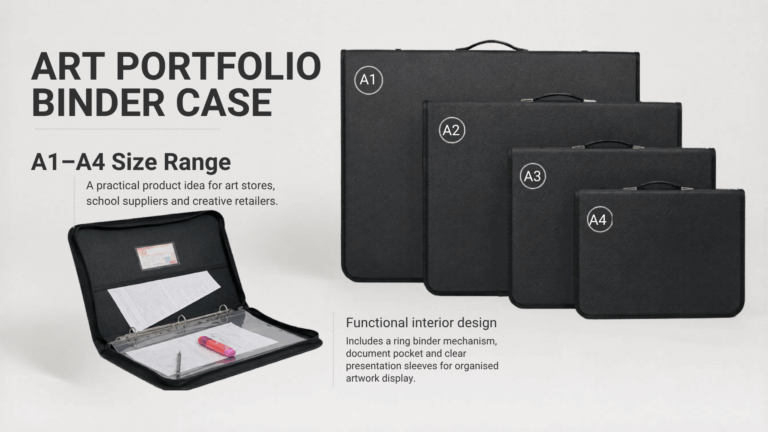
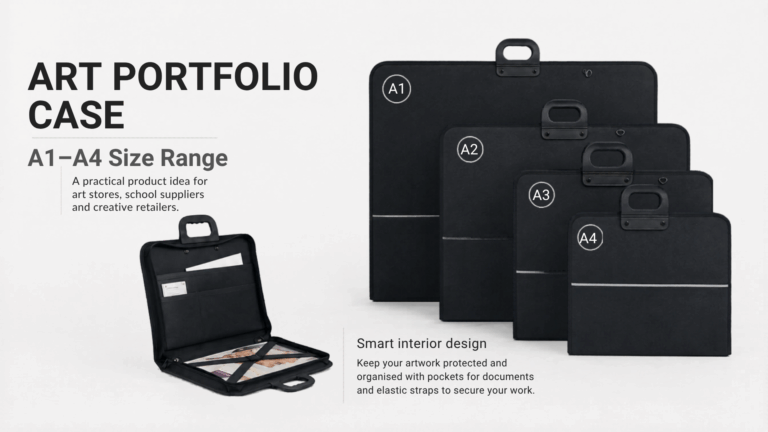
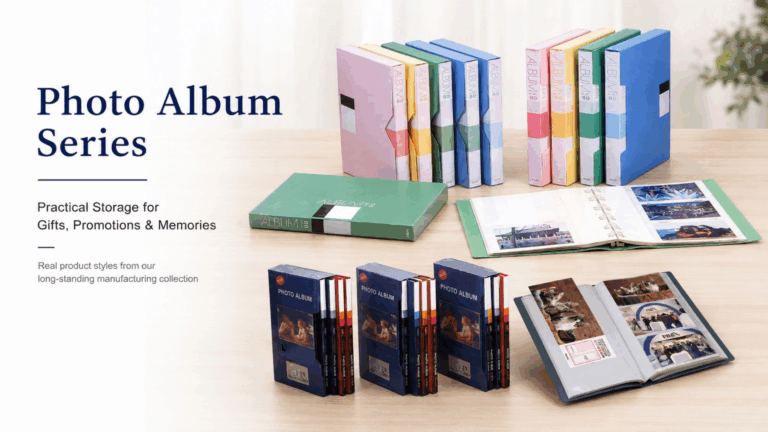
These details later helped us develop other storage and presentation products, including display books, presentation books, portfolio cases and art portfolio bags.
The product forms changed, but the core idea stayed the same:
help users organize important materials, protect them properly and present them more clearly.
Looking Ahead
Today, digital tools are everywhere. But physical filing products still have their place.
Schools still use printed materials. Offices still need document storage. Training centers still prepare handouts. Companies still need presentation folders for meetings, events and customer communication.
The market may have changed, but the value of practical organization has not disappeared.
From file folders to clip files, and from clip files to broader filing and presentation solutions, this product evolution reflects how our factory has grown with user needs over time.
For B2B buyers, these products are not only stationery items. They are practical solutions with a long history, clear usage and stable market value.
Looking for File Folder and Clip File Products?
We supply file folders, clip files, PP folders, presentation books and related document storage products for stationery retailers, schools, tutoring centers, offices and B2B buyers.
Custom printing, OEM production, color options and packaging support are available based on your market needs.