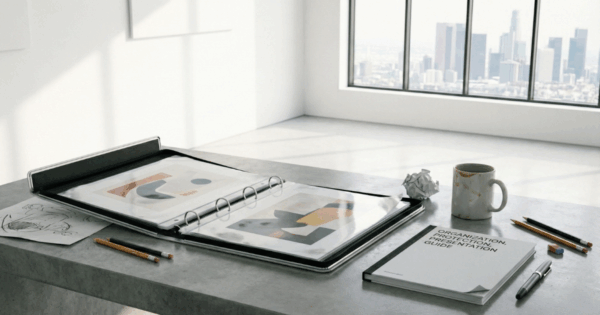
A multi-ring art portfolio binder helps organize, protect, and present artwork in a structured format.
Art Portfolio Binders: Organization, Protection, and Presentation Guide
In creative education and professional practice, presentation format plays an important role in how artwork is understood and evaluated. Art portfolio binders provide a structured way to organize, protect, and display physical work, making them a common tool for students, designers, and creative professionals.
This guide explains how portfolio binders function, how to organize them effectively, and why they remain relevant even in the digital age.
Why Creative Professionals Use Portfolio Binders
Portfolio binders offer flexibility and protection that loose sheets cannot provide.
Modular Presentation
A multi-ring binder system allows pages to be added, removed, or rearranged at any time. This is especially useful for students updating projects, designers refining case studies, or artists preparing different versions of a portfolio for various audiences.
With protective sleeves, firm covers, and reinforced construction, portfolio binders help prevent artwork from smudging, bending, or surface damage. This makes them suitable for:
Long-term storage
Submission portfolios
Archival documentation
Acid-free and glare-resistant sleeves are often recommended to preserve image clarity and paper quality.
Professional First Impressions
Compared to loose sheets, a well-organized binder presents work in a controlled and professional format. In school admissions, client presentations, or gallery reviews, structured presentation can help reviewers focus on the work without distraction.
How to Organize a Portfolio Binder Effectively
A portfolio binder should function like a visual narrative rather than a random collection of work.
Suggested structure:
Cover page — Name, portfolio title, and date
Artist statement — Brief explanation of focus, style, or intent
Project layout — One to two works per page with consistent spacing
Captions — Title, medium, size, and short concept notes
Dividers — Separate themes, techniques, or time periods
Resume or insert pocket — Optional for interviews or applications
Consistency in layout helps guide the viewer through your work.
Real-World Uses for Portfolio Binders
Portfolio binders are used across many creative fields:
Art students preparing graduation or admission portfolios
Interior designers and architects presenting plans or visual concepts
Creative agencies and freelancers organizing proposals or case studies
Product designers archiving sketches and development stages
The adaptability of ring systems allows content to be updated without rebuilding the entire portfolio.
Binder Care and Maintenance
Maintaining the binder helps preserve both the container and the artwork inside.
Cleaning — Wipe PP or PU surfaces with a damp cloth; brush fabric gently
Storage — Keep flat and away from direct sunlight
Handling — Avoid overloading sleeves to reduce stress on rings and pages
Well-maintained binders can support portfolio continuity over several years.
Common Questions About Portfolio Binders
What’s the difference between D-ring and multi-ring systems? D-ring binders generally allow higher page capacity and lie flat when opened. Multi-ring systems distribute pressure more evenly and support smooth page turning.
Can pages be added later? Yes, ring systems are designed to allow page updates or reordering as projects evolve.
Do binders include sleeves? Some formats include sleeves, while others allow users to select refill options based on their needs.
Conclusion
Art portfolio binders remain a practical tool for organizing and presenting physical work. They provide flexibility, protection, and a structured viewing experience that supports professional and academic presentation.
Even in a digital-first environment, physical presentation formats continue to play a role in reviews, exhibitions, and interviews.