Why CD and DVD Storage Products Were Once So Popular
There was a time when CDs and DVDs were part of everyday life. Music, software, photo albums, company catalogues, learning materials and presentation files were often stored on discs. Before cloud storage and streaming became common, physical discs were one of the most practical ways to keep and share digital information.
Because of this, CD and DVD storage products became useful accessories for many different markets. They were used at home, in offices, in schools, in promotional gifts and even as part of branded product collections.
From a Top Sales perspective, these products were not only about storing discs. They solved a very clear problem: how to protect, organise and carry fragile media in a simple and affordable way.
A Practical Product for a Physical Media Era
CDs and DVDs were easy to scratch, lose or damage if they were not stored properly. A storage case helped users keep discs in order and protected them from dust, bending and surface damage.
For consumers, this meant keeping music, movies or photos in one place. For companies, it meant organising catalogues, product data, training materials or presentation files for customers and sales teams.
Useful for Home, Office and Promotional Markets
CD storage products were widely used because they fit many different sales channels. Retailers could sell them as everyday storage accessories. Companies could use them as promotional gifts. Schools and institutions could use them to store learning materials.
This made the product category flexible and commercially attractive. One basic product could serve many types of buyers.
A Small Product with High Customisation Potential
Another reason these products sold well was their strong customisation potential. They could be made in different sizes, colours, materials and cover designs. Some styles were simple and functional, while others used printed patterns, colourful covers or gift-style packaging.
For manufacturers, this created many opportunities for OEM and private label development.
From PP Material to Printed CD Holders
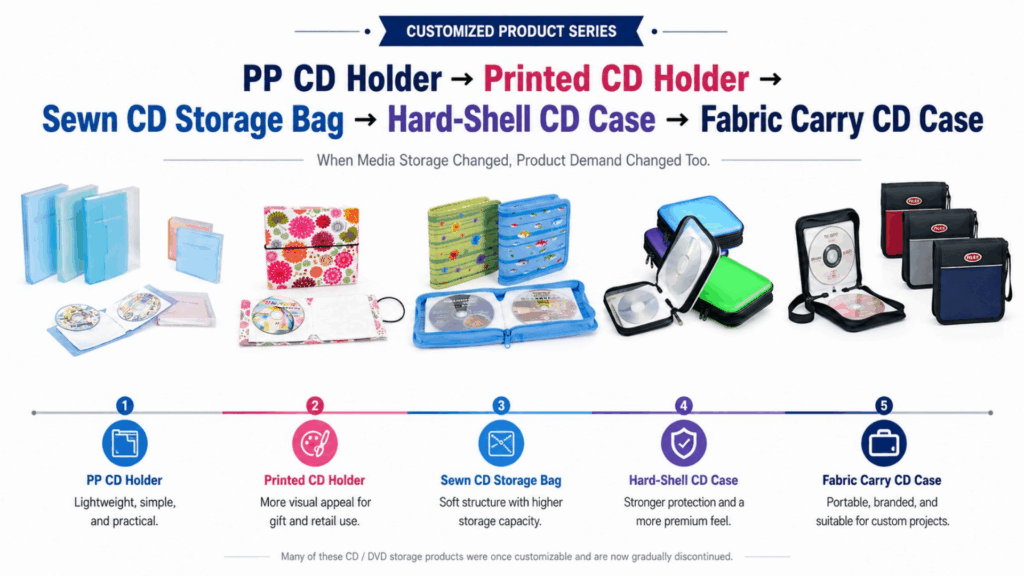
As the market developed, some CD storage products moved from simple PP structures to sewn storage bags. This change allowed the product to feel softer, stronger and more portable.
Instead of only holding a few discs, sewn CD bags could carry more discs and offer better protection.
Sewn CD Bags Improved Portability
Sewn CD storage bags usually included zipper closures, soft covers and multiple internal sleeves. This made them more suitable for users who needed to carry discs from one place to another.
For example, salespeople, students, photographers or office staff could keep many CDs together and take them on the road.
The Product Became More Like a Small Bag
Once sewing techniques were used, the product was no longer just a folder. It became closer to a small storage bag or media organiser.
This opened up more possibilities in shape, colour, lining, zipper design and cover material. It also allowed manufacturers to apply bag-making experience to a new product category.
Useful for Retail and Gift Channels
Sewn CD storage bags were easy to position as practical gifts. They were not expensive, but they looked more complete than a simple sleeve. This made them suitable for stationery stores, electronics shops, promotional gifts and corporate giveaways.
From a sales perspective, this kind of product worked well because it combined function, portability and a giftable appearance.
Hard-Shell CD Cases and Plastic Injection Development
Later, CD storage products also appeared in hard-shell formats made by plastic injection. These products looked more solid, protective and modern.
Compared with PP or sewn styles, hard-shell CD cases offered a stronger structure and a more durable appearance.
Plastic Injection Created a Stronger Product Image
Hard-shell CD cases gave customers a sense of better protection. The firm outer shell helped protect discs from pressure, bending and impact during storage or travel.
This made the product suitable for customers who wanted a more durable option, especially for carrying larger numbers of CDs or DVDs.
Colour Options Made the Product More Marketable
Plastic injection products could be made in different colours, such as blue, green, yellow, red or black. These colour choices made the product more attractive for retail shelves.
Bright colours also helped customers separate different types of discs. For example, one colour could be used for music, another for software, and another for photos or movies.
A More Finished Product for Retail Sales
Hard-shell CD cases looked more like a finished consumer product. They were suitable for blister packaging, hanging display, shelf display or promotional sets.
For buyers, this type of product was easier to sell because it looked clean, complete and easy to understand.
Why These Products Gradually Disappeared from the Market
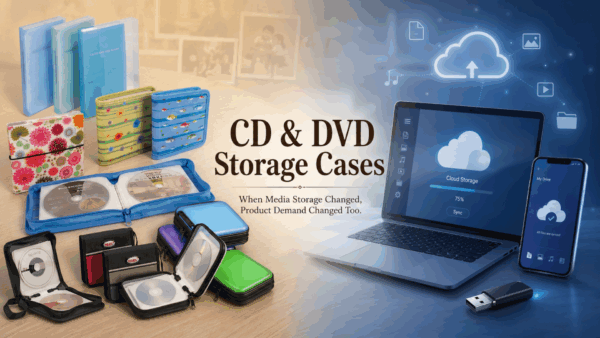
Although CD and DVD storage products were once practical and popular, the market changed. As digital storage, USB drives, cloud systems and streaming platforms became common, fewer people needed to store physical discs.
This does not mean the product was not valuable. It means the original user behaviour changed.
The Shift from Physical Media to Digital Storage
When music, movies, photos and documents moved online, the need for CD and DVD storage naturally decreased. People no longer needed to carry many discs or organise them at home or in the office.
The product demand became smaller because the daily habit disappeared.
Office and School Materials Became Digital
Many companies and schools also changed their workflow. Product catalogues, training files and teaching materials moved from discs to websites, cloud folders or QR code links.
This reduced the need for physical media packaging and storage.
A Product Category Affected by Time
Some products disappear not because they are poorly designed, but because the world around them changes.
CD storage products are a good example. They were useful in their time, but their market became smaller as technology changed.
What This Product History Says About Our Manufacturing Experience
Even though these CD and DVD storage products are no longer our main product category, they still show an important part of our manufacturing history.
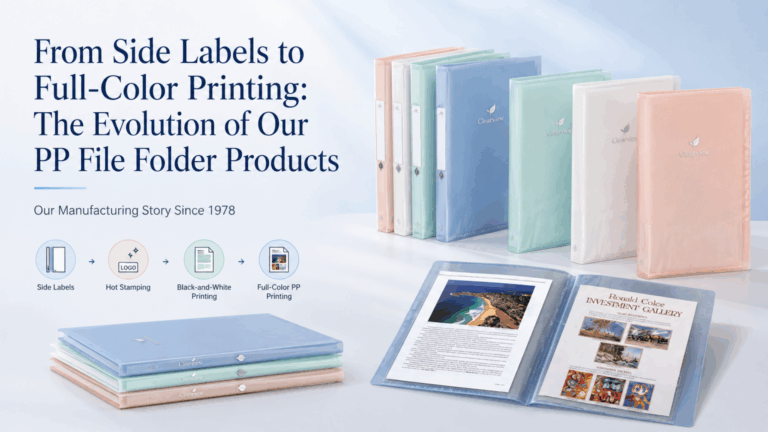
We worked with different materials, structures and production methods. From PP folding holders to sewn zipper CD bags, from printed covers to plastic injection hard-shell cases, this category reflects how we developed different products for different market needs.
Experience Across Different Materials
This product category shows that we worked with more than one type of material. PP, fabric, zipper components, plastic shells and printed surfaces all required different production knowledge.
This experience helped us understand how material choice affects cost, function, appearance and market positioning.
Experience in Product Development
CD storage products also required product development thinking. Each version had a different purpose:
- PP styles focused on lightweight storage
- Printed styles focused on visual appeal
- Sewn bags focused on portability
- Hard-shell cases focused on protection
- Gift-style versions focused on presentation value
This shows how one product category can develop into many different sales directions.
Experience in Following Market Demand
The rise and decline of CD storage products also reminds us that manufacturing must follow real market behaviour. A factory does not only produce items. It must observe how customers use products, how buyers change their orders and how technology affects demand.
This experience is valuable because it helps us understand product life cycles more clearly.
The Products May Be Gone, but the Development Experience Remains
Many CD and DVD storage products are no longer produced today, but they still represent an important stage in product development. They show how practical products were created for a specific time, a specific user habit and a specific business need.
From a Top Sales perspective, these products were successful because they solved a real problem. They protected discs, organised media, supported branding and helped users manage physical information more easily.
Today, fewer people use CDs and DVDs. But the product logic behind these items is still meaningful.
A good storage product is not only about the object it holds. It is about helping people organise what matters to them at that moment.
In the past, that object was a CD or DVD. Today, it may be travel items, documents, art portfolios, cosmetic pouches, tech accessories or promotional gifts.
The product changes, but the manufacturing experience continues.
This is why even discontinued products still have value. They show what we have made, what markets we have served and how product development changes with time.