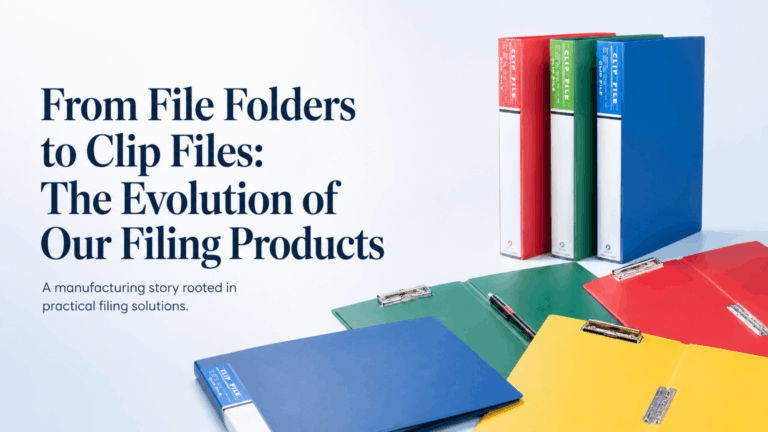
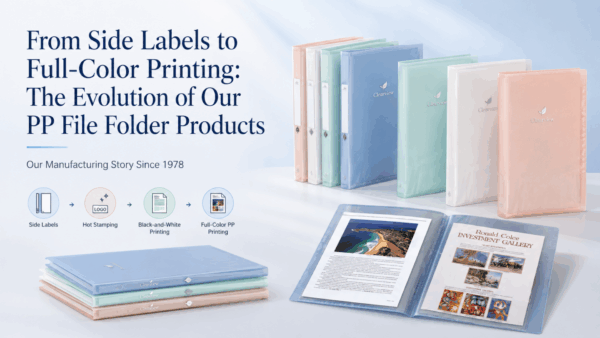
Our manufacturing story began around 1978 with a very practical product category: file folders.
Before we developed art portfolio bags, presentation books, portfolio cases and other creative storage products, our factory had already spent many years producing PP file folders and document storage items. These early products may look simple, but they helped us build the manufacturing foundation we still rely on today.
A file folder is not only a piece of stationery. It is a tool for organizing, protecting and presenting documents. For offices, schools, tutoring centers, kindergartens and institutions, folders have always played an important role in daily paper management.
This practical beginning shaped the way we look at products. We do not see folders, cases or bags only as items to sell. We see them as solutions for people who need to classify, carry, protect and present important materials.
Starting with Side-Label File Folders
In the early stage, many file folders were designed with a simple side-label structure.
The purpose was clear: users could write or mark the subject on the side, making documents easier to identify, classify and retrieve. For offices and schools, this was already a very useful feature.
Side-label folders were practical, simple and easy to use. They reflected the earliest need of the market: organization.
At that time, customers did not necessarily need complicated designs. They needed products that could help them keep documents in order. This gave us our first understanding of how storage products should work in real daily use.
Why Material Choice Matters
From Practical Function to Better Appearance
As customer needs changed, file folders also began to evolve.
After side-label folders, hot stamping in gold and silver became popular. Compared with plain folders, gold and silver stamping gave the product a more refined and formal look.
This made folders more suitable for presentation use, school materials, company documents, certificates and promotional purposes.
Later, black-and-white printing became another common option. Customers could print school names, company information, simple graphics, instructions or document titles directly on the folder surface.
At this stage, folders were no longer only storage tools. They also became communication tools.
A printed folder could represent an organization, a school, a course, an event or a brand.
The Development of PP Full-Color Printing
As printing technology and market demand continued to develop, PP full-color printing became an important part of the file folder category.
Color printing gave folders stronger visual value. It allowed customers to use brighter designs, brand colors, school logos, cartoon-style illustrations, event themes or product information on the folder cover.
Even today, PP color-printed folders are still popular in many markets.
In Taiwan, for example, tutoring centers, kindergartens and schools often like colorful PP folders because they are practical, affordable and easy to customize. They can be used for worksheets, course materials, student records, parent communication documents, certificates and printed handouts.
For these users, a folder is not just a folder. It becomes part of the school image, learning experience and daily communication.
This is why color-printed PP folders continue to have market value.
Why This Early Manufacturing Experience Still Matters
Producing file folders for many years gave us more than product experience. It gave us a deeper understanding of materials, printing, cutting, finishing and real user behavior.
A good folder needs stable material.
It needs clean cutting.
It needs accurate printing.
It needs smooth finishing.
It needs to be practical enough for daily use.
These details may not always be visible at first glance, but they affect how the product performs in the hands of users.
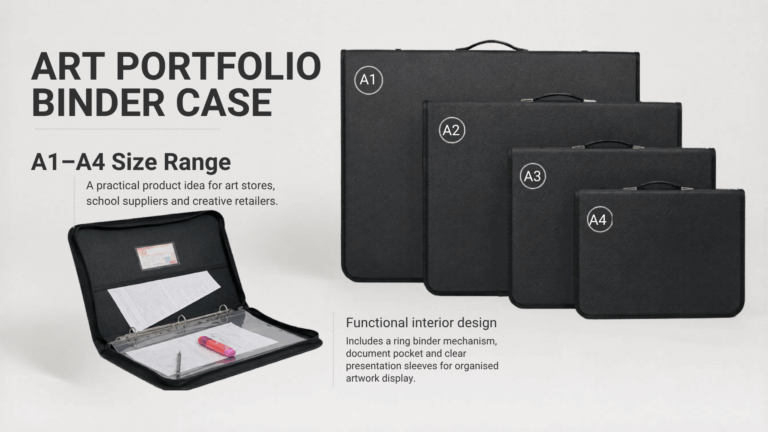
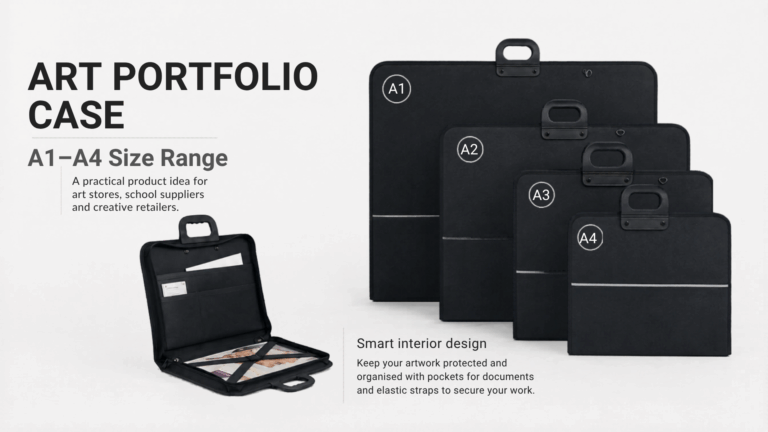
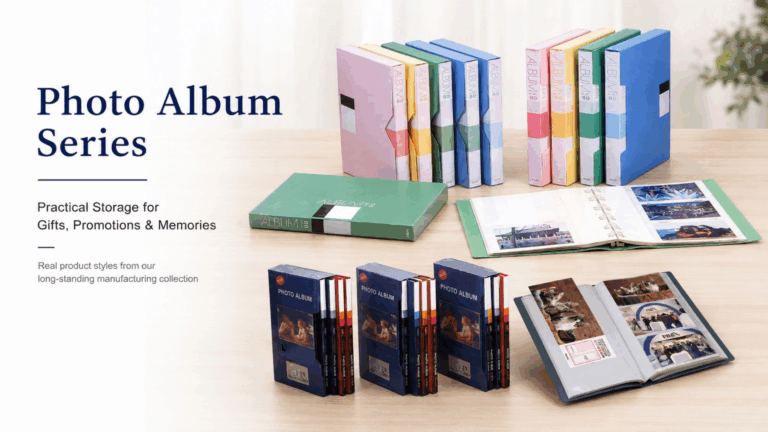
This experience later helped us expand into other storage and presentation products, including document folders, display books, presentation books, portfolio cases and art portfolio bags.
The product forms changed, but the core purpose stayed the same: helping users organize, protect, carry and present their work or documents.
From File Folders to Portfolio Products
Our later development into portfolio products was not a sudden change. It was a natural extension of our original manufacturing background.
File folders helped users organize documents.
Display books helped users arrange pages for viewing.
Presentation books helped users show materials more professionally.
Portfolio cases helped users protect larger sheets.
Art portfolio bags helped users carry artwork and creative materials more easily.
Each product serves a different purpose, but they are all connected by the same idea: practical storage and presentation.
This is also why our product line is suitable for art stores, stationery retailers, school suppliers, tutoring centers, kindergartens, creative product distributors and OEM / private label buyers.
We understand that buyers do not only need a product. They need a product that fits their market, their customers and their selling channel.
Looking Ahead
From side-label folders to gold and silver stamping, from black-and-white printing to PP full-color printing, our file folder products have followed the changing needs of the market for decades.
What started as a simple document storage product became the foundation for a wider range of portfolio and presentation solutions.
Today, we continue to develop practical storage products for education, stationery, art and creative markets. Our product range will continue to grow, but our direction remains the same: to create useful, reliable and customizable products for people who need to organize, protect and present important materials.
This article is only the beginning of our product story. In the future, we will continue introducing more products from our manufacturing range, including display books, presentation books, portfolio cases, art portfolio bags and other customized storage solutions.
Looking for File Folder and Portfolio Product Solutions?
We supply PP file folders, document folders, display books, presentation books, portfolio cases, art portfolio bags and related storage products for schools, stationery retailers, art stores, tutoring centers, kindergartens and B2B buyers.
Custom printing, OEM production, private label options and product development support are available based on your market needs.